1
With The Taliban In Power, Best-Selling Author Worries For The Afghan People


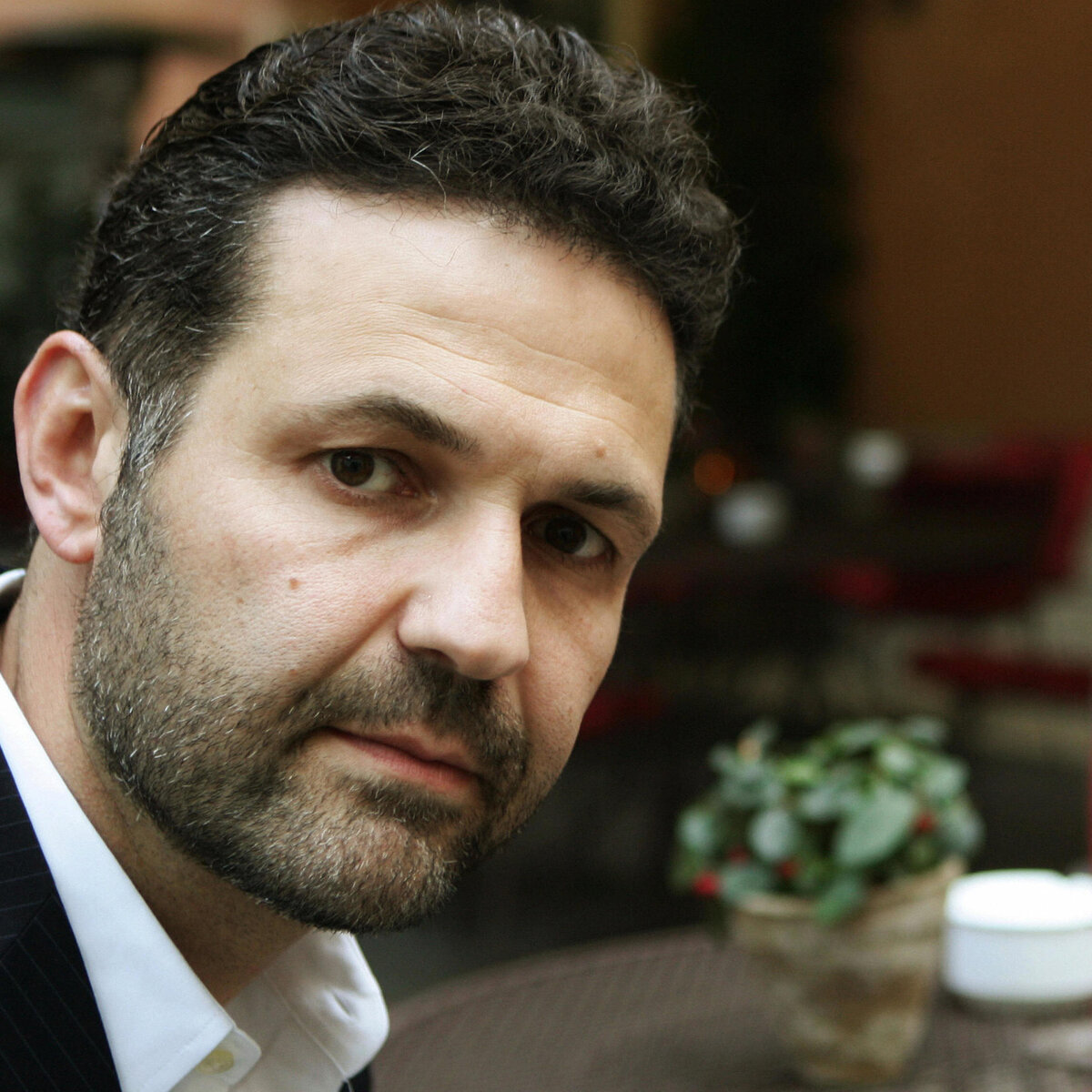
Khaled Hosseini is all too familiar with the heartbreak of Afghanistan's history. His epic novels, like The Kite Runner, richly portray the ups and downs of a country shattered by decades of war, tribal feuds, coups and corruption.
From his home state of California, Hosseini started a foundation some years ago to support Afghans displaced by war. He believes that the U.S. and the international community have a moral obligation to help tens of thousands of vulnerable Afghans leave the country.
Hosseini has family and friends there who he told me are scared for their lives with the Taliban now in control. "This is a group that for 20 years has systematically brutalized and terrorized Afghans, has blown up hospitals and roads and schools, has slaughtered countless Afghans, many of them just ordinary villagers, women and children as well," he says. "And now they're back and they're saying there's nothing to be frightened of, and that's very hard to believe. I'm concerned greatly for ordinary Afghans. I'm concerned for ethnic minorities, for journalists, for people who worked — human rights activists. But especially I'm concerned about women and girls whose rights stand to be curtailed, and all the gains of the last 20 years stand to be lost. So I'm concerned for a large swath of the Afghan population."
Interview Highlights
On the Taliban's claims that they'll lead differently this time.
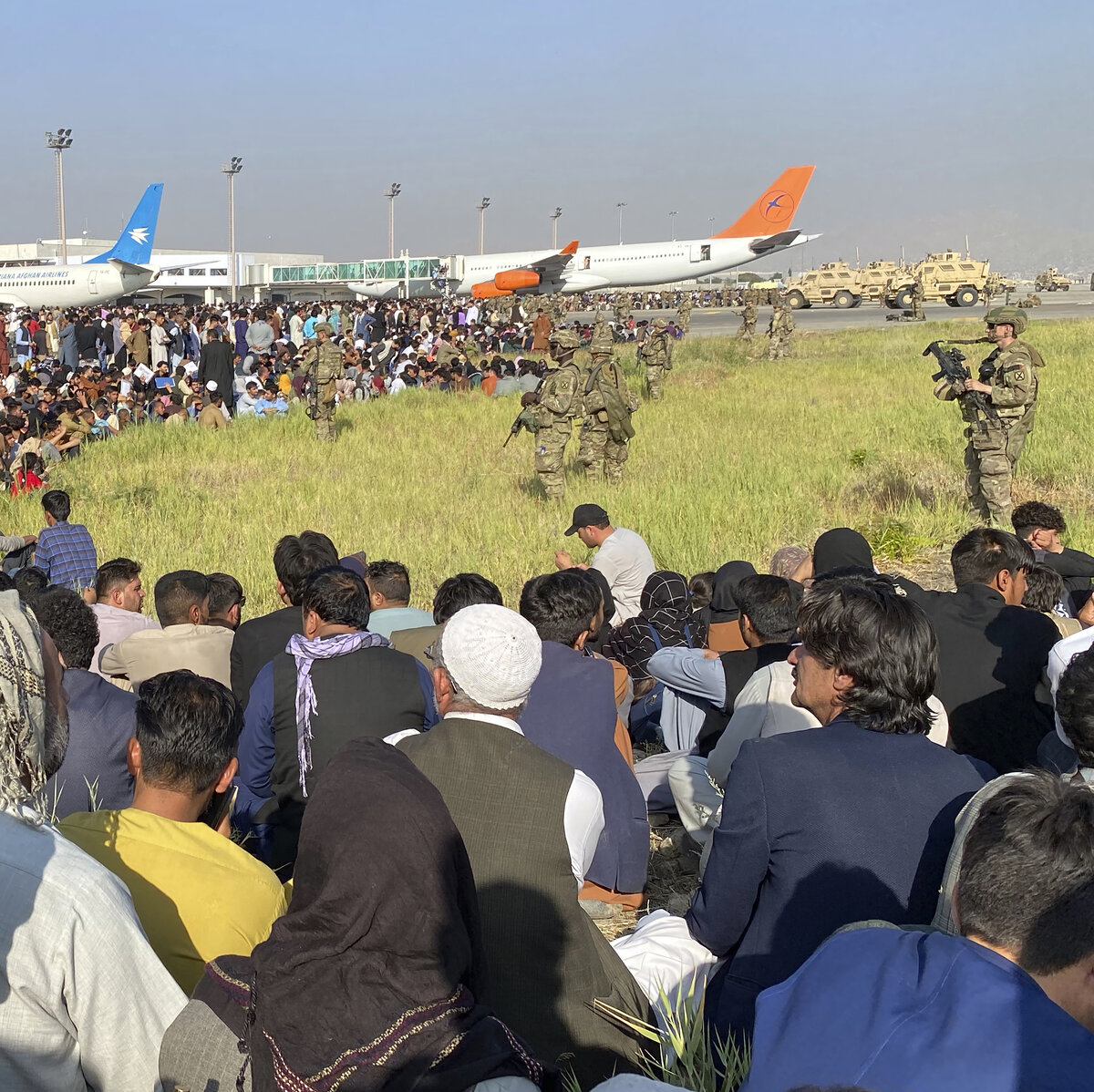
They'll have to prove it. I'm skeptical until I see it, I'll see when I believe it. I mean, the behavior of the Taliban really going back to the mid 90s, even more than 20 years ago, has been deplorable. They have been brutal. And people see those images of people running alongside those planes on the tarmac of the Kabul airport. I can understand why they're scared, they remember the last time the Taliban were here and they've been watching for 20 years the ruthless and brutal methods the Taliban have used to terrorize people into submission and take over the country.
On how Afghans might be able to express themselves going forward

One of the really pleasant things about Afghanistan the last 20 years plus is, Afghanistan has enjoyed a relatively robust and free press. Afghan leaders were routinely criticized on television, the political debate and dialogue on Afghan television was very lively, and from multiple sides. So that's one of the things that will be a giveaway as to how the Taliban are behaving this time around. What is the Afghan press saying? Are they capable of expressing, you know, reporting the stories in a truthful way or are the Taliban going to essentially control the state media and impose those restrictions? So I think that's one of the markers that I'm going to be looking for.
On President Biden's criticisms of the Afghan government and military
The president is correct to point the finger, but the finger shouldn't just be pointed at the Afghans. They certainly played their part. I do think that one of the the real failures of the last 20 years has been the failure to establish a government that can deliver services to its people, that can protect its people from insurgents, and that has legitimacy in the eyes of ordinary Afghans. Instead, what they got was Afghan leaders who were greedy and corrupt, and who failed to do those things, and therefore lost any semblance of legitimacy in the eyes of ordinary Afghans. That, when there's no real belief in the state and the government that is asking you to go and risk your lives and fight, a government that is not feeding you, that is not clothing you properly, that's not arming you properly, that's not paying you properly in many cases — not even paying you — but is insisting that you stay and fight against a brutal and powerful united army that's knocking at the gates. Those people who drop their guns and ran, I can't condone that, but certainly I can understand it
On what's stayed with him from his return visits to Afghanistan
It is so surreal to talk about Afghanistan in my childhood, given what's different, what's transpired the last 40 years and particularly in the last few days — but look, I had a wonderful childhood in Afghanistan. It was a wonderful place to grow up. I was lucky enough to live in Afghanistan in those final days of peace and anonymity that Afghanistan enjoyed in the 70s. Kabul was a thriving, open city. You could see signs of progress everywhere. Women were in the workforce. I had women in my own family who were lawyers and doctors and professors who dressed as they wanted, they drove. There was a theatre community and there was music. And it was a very, very different place. I'm just lucky to have been able to live through those years. And I try to recreate at least part of that world in the in my novel The Kite Runner.
Afghanistan isn't just about the Taliban. It's not just about the opium trade and terrorism and so forth. You know, I hope that when people read my books, they will walk away with hopefully a deeper and slightly more nuanced understanding of Afghanistan, and appreciate Afghanistan as a slightly more complicated place than what they've seen on television.
This story was edited for radio by Reena Advani and Nina Kravinsky and adapted for the web by Petra Mayer
Afghanistan's Music School Falls Silent, Its Future Is Uncertain Under The Taliban


The doors of the Afghanistan National Institute of Music in Kabul are closed. The music school's young students, teachers and faculty are staying home — they have reason to fear. According to founder and director Ahmad Sarmast, "armed people entered school property" recently. He says they tried to steal cars the school uses for transportation and destroyed musical instruments. Under the Taliban in the 1990s, music was strictly forbidden. Performing, selling or even listening to music at home could get you in trouble.
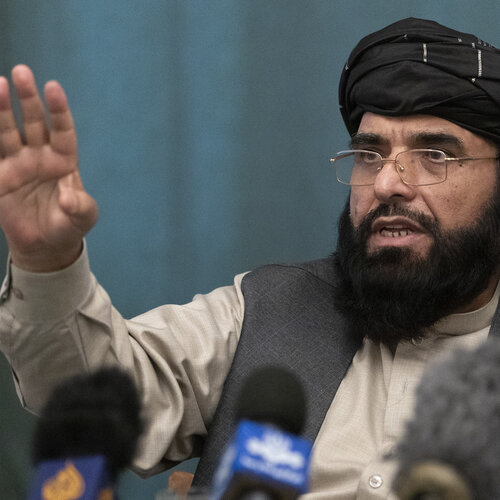
Now ANIM's future is uncertain. With the disorder caused by the Taliban's takeover of the city, "The situation is very unpredictable," says Sarmast. "Things are changing very fast in Kabul nowadays."
Sarmast, who spoke to NPR from Australia where he's visiting family, is in constant contact with the school's faculty. He says some students did not bring their instruments home, "because of the fear that if Taliban will be searching door to door, if the instruments will be found in the house, it might cause them some trouble." When he reported the recent break-in, he says a policeman in the area, "blamed our security people for failure that they opened the gates of the school."

It's Afghanistan's leading music school
With help from donors including the World Bank and the National Association of Music Merchants (NAMM), ANIM opened in Kabul in 2010. Boys and girls study music and academics in the same classrooms. Students learn to play instruments from both the Afghanistan and Western classical traditions.
The school has been held up as a great success story in the effort to renew cultural life and the arts in Afghanistan. Ensembles from the school, including the all-female Zohra orchestra, have performed around the world. From Carnegie Hall in New York to the World Economic Forum in Davos, these young musicians, many from impoverished communities, have shown audiences a side of Afghanistan that often gets lost in news accounts.
Making music can have deadly consequences
Making music has long been a risky endeavor in Afghanistan. Over the years, musicians have reportedly been threatened, kidnapped or killed. During one of ANIM's concerts in 2014, a suicide bomber sitting behind Sarmast exploded. Two people were killed and several others were injured. Sarmast lost his hearing for a time and had an operation to remove shrapnel from his head and body. "Luckily, no students have been injured or killed," he says, "But of course, the trauma that they received during this bombing probably would have stayed with them all their life."

While the Taliban have presented themselves to the media as less violent than they were in the 1990s, Sarmast is skeptical. "Today the Taliban are promising that they would be respecting human rights and they will be having respect for diversity," he says, "But ... the video footage emerging with the social media is not very encouraging."
Music entertains, strengthens and heals
Sarmast is concerned about the future of the school's students. He says 10 of its graduates have received scholarships to study music in the U.S., including pianist Elham Fanoos who attended Hunter College in New York and recently got his master's from the Manhattan School of Music. Speaking from his home in New York, Fanoos credits ANIM as, "the reason I am here." He, too, is worried for the safety of everyone involved with the school and hopes Afghans can continue making music.
"I think a culture makes the country and give the country the strength that it needs to have and to represent the country," says Fanoos. "Without ... cultural activities, a country is completely incomplete."

Sarmast seems determined not to let the Taliban get in the way of the progress ANIM has made. The school had recently expanded to a larger building to accommodate more programs and ensembles. "Music is not just a type of entertainment. It's not just an art," he says. It's a "powerful force" to help Afghans heal "from the years of civil war."
Sarmast plans to reopen the Afghanistan National Institute of Music because, he says, "the nation needs it." He hopes the international community will "keep an eye" to make sure the Taliban keep its promises to respect human rights, "to make sure that the musical rights of the Afghan people [are] not toppled again."



Comments
Post a Comment